Coffee Ceremony
Adey Abeba: Buying the Coffee Set People Actually Recognise
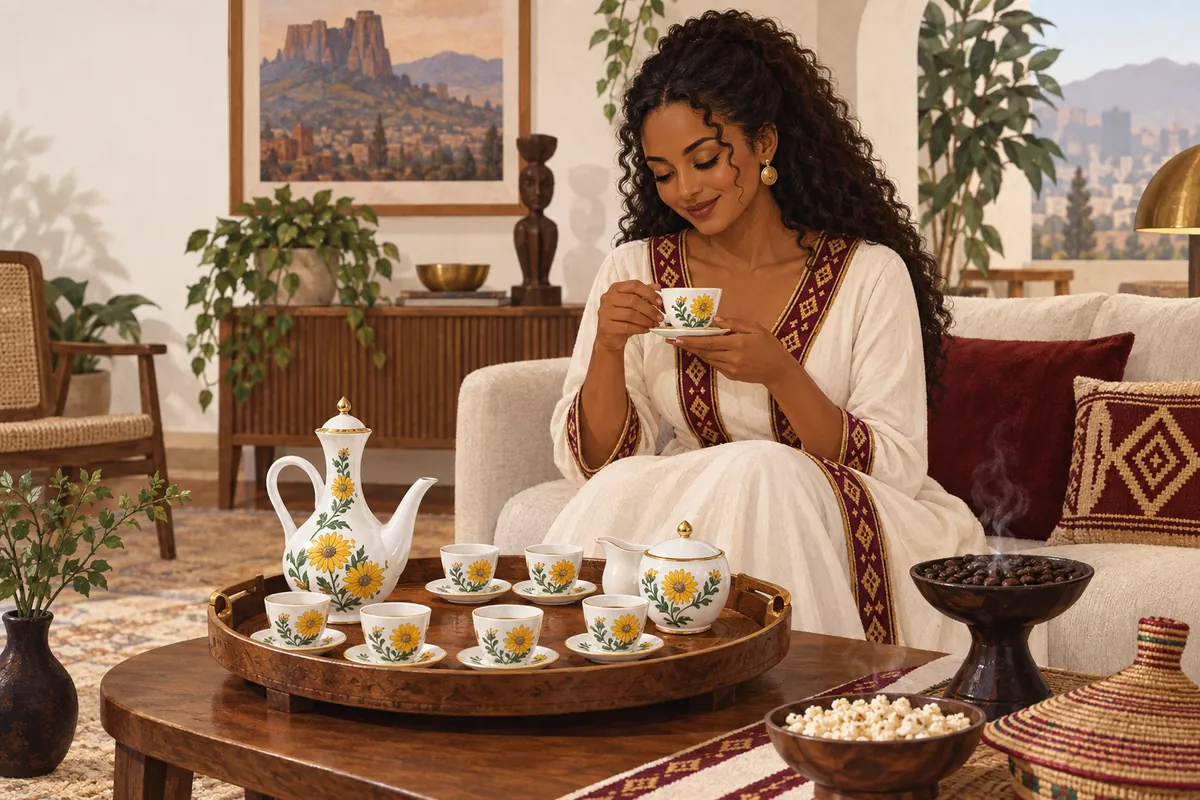
The yellow daisy on Ethiopian dishware was not chosen at random. It is the Meskel flower that covers the highlands when the rains end, and it is the pattern most Habesha households know on sight.
Adey Abeba 23-Piece Coffee Set · Last reviewed
Why we recommend it
The pattern is the reason to buy this rather than any other set. Adey Abeba is tied to the end of the rainy season and to Meskel and the new year — the exact stretch of the calendar when the most coffee gets made for the most guests. A plain set is dishware; this one is a reference she will get immediately.
Piece count matters more in this category than in any other. Coffee is served in three rounds — abol, tona and baraka — to everyone in the room, and a six-cup set runs out partway through the first round of an ordinary Sunday afternoon. A service in the twenties is sized for how the ceremony is actually performed.
A matched service absorbs breakage. Sini cups are small, thin and handled constantly; they break. Owning a set means a loss is a loss of one cup rather than the end of a pair.
Who it's best for
- A wife who hosts, or who moved away and left her mother's set behind
- A wedding or a first home starting the coffee equipment from zero
- Someone who already owns a jebena and nothing to serve from
- A household where guests arrive without warning, which is most of them
What makes it a good gift
- Recognised instantly by anyone Habesha
- Enough pieces for a real gathering, not a demonstration
- Matched, so a broken cup does not ruin the set
Important considerations
The things worth checking before you order — this is where gifts like this most often go wrong.
- Check whether a jebena is included. "Coffee set" covers everything from cups alone to a full service with pot, tray and rekbot, and the piece count on its own tells you very little about which you are getting.
- Confirm dishwasher and microwave suitability if it is meant for daily use. Gilded rims usually rule out both, which is fine for an occasion set and irritating for an everyday one.
- These sets are heavy and fragile, and shipping damage is the standard complaint in this category. Open and check it on arrival rather than storing the box unopened until the occasion.
- Sini cups are small deliberately. Anyone expecting a mug-sized cup will find them tiny — that is the form, not a defect, but it is worth saying if the recipient is new to the ceremony.
Pros
- The most recognisable Ethiopian dishware pattern
- Sized for a genuine gathering
- Matched service survives individual breakages
- Fits a wedding or new-home occasion naturally
Alternatives to consider
If this is not quite right, these solve a similar problem differently.
Coffee Ceremony
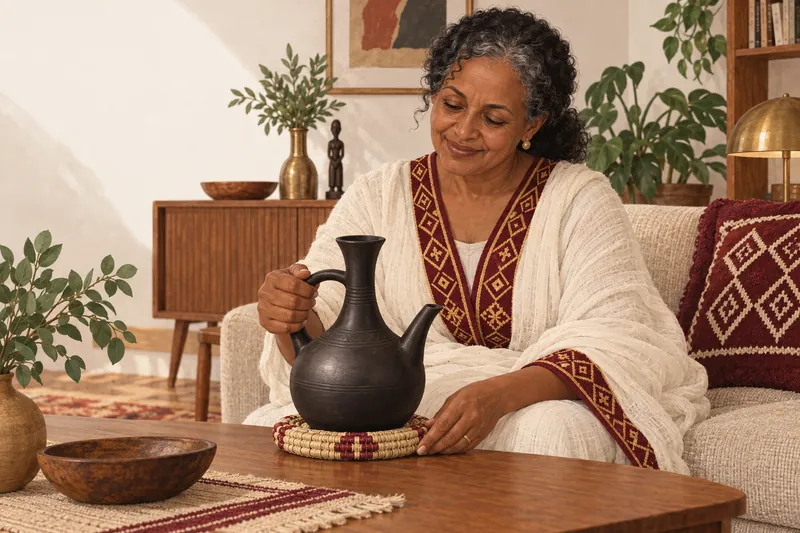
Traditional Clay Jebena Coffee Pot
The handmade clay pot at the centre of the buna ceremony, in the classic round-bellied shape with a long neck and straw lid.
- Best for
- Mom · Grandma · A first ceremony set
- Budget
- Under $50 · typical range, not a live price
Coffee Ceremony
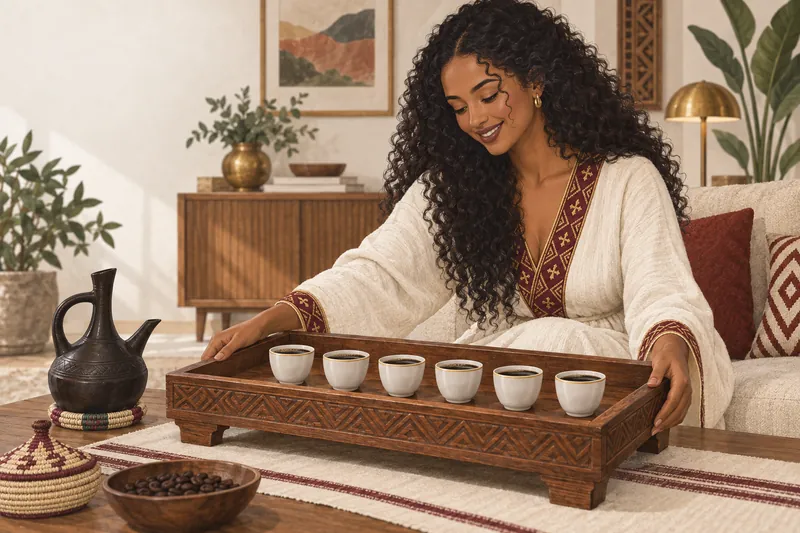
Handcrafted Wooden Coffee Tray
A carved wooden serving tray sized for a jebena and a full set of cups, usually with a raised rim.
- Best for
- Wedding · Anniversary · The host who has everything else
- Budget
- Under $100 · typical range, not a live price

Coffee
Electric Coffee Mug Warmer & Mug Set
A heated coaster with a matched mug — bought for the specific problem of coffee going cold while the conversation carries on.
- Best for
- Brother · Coffee ceremony · A desk that gets busy
- Budget
- Under $50 · typical range, not a live price
Ready to buy the adey abeba 23-piece coffee set?
Check current price, availability and seller reviews on the retailer’s page — we do not reproduce those here because they change constantly.
This is an affiliate link. If you buy through it we may earn a commission at no additional cost to you, and it does not affect what we recommend or what we say about it. Our affiliate disclosure.
Related gift guides
Jewelry
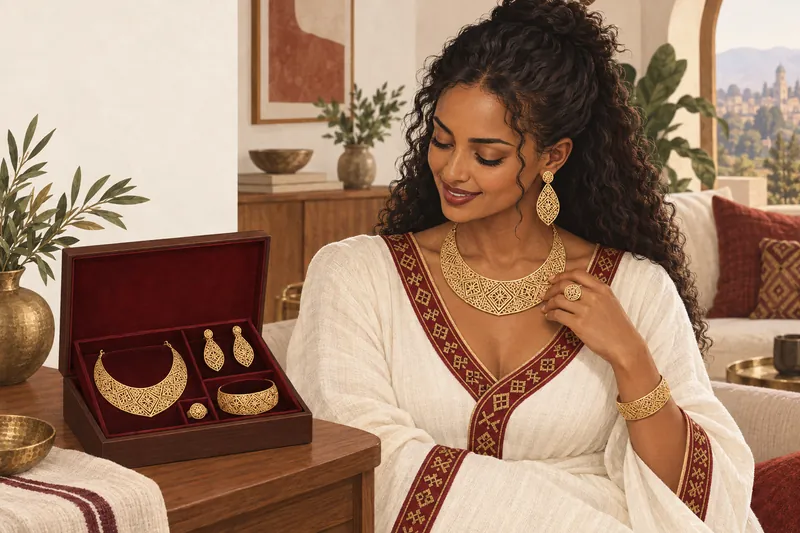
Habesha Necklace, Earring, Ring & Bangle Set
The full traditional suite in matched gold-plated styling — necklace, earrings, ring and bangle, which is how Habesha jewellery is actually worn at a wedding.
- Best for
- Wife · Wedding · Holidays
- Budget
- Under $100 · typical range, not a live price

Gift Sets
Mr & Mrs Crystal Wine Glass Set
Two engraved stemmed glasses with an opener and stopper in a pine keepsake box — the couple's set that is brought out on occasions rather than used weekly.
- Best for
- Newlyweds · A couple who mark anniversaries · Arrives ready to give
- Budget
- Under $50 · typical range, not a live price

Gift Sets
Mr & Mrs Marble Mug Set
A boxed pair of 14oz marble-effect mugs with lids and spoons — the only couple's set here that enters the daily rotation instead of a cupboard.
- Best for
- Newlyweds · A couple who do not drink · Everyday use, not display
- Budget
- Under $50 · typical range, not a live price